



Strategic Asset Acquisition and Legal Frameworks
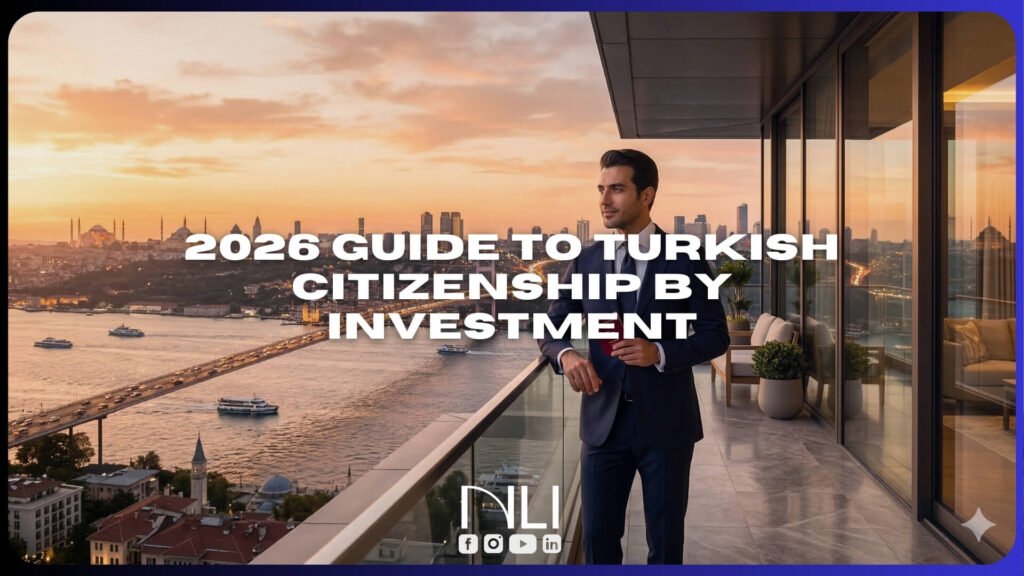
In the current global economic climate, high-net-worth individuals (HNWIs) are increasingly prioritizing “Plan B” jurisdictions that offer both legal security and robust capital growth. The Turkish Citizenship by Investment (CBI) program, particularly through the $400,000 real estate path, has evolved into a sophisticated financial instrument. For the institutional investor, this is not merely an immigration play; it is a strategic acquisition of a high-yield asset in a G20 economy.
Introduction: The Evolution of Global Mobility Assets
In the contemporary macroeconomic climate, high-net-worth individuals (HNWIs) and institutional investors are radically recalculating their geographic risk. Securing a second passport is no longer viewed merely as a luxury travel document; it is a foundational pillar of comprehensive wealth preservation, geopolitical hedging, and tax optimization. Among the various global Tier-1 immigration programs, the Turkish Citizenship by Investment (CBI) program has matured into a highly sophisticated financial instrument.
Particularly through the real estate acquisition pathway, the Republic of Turkey offers a unique value proposition: the opportunity to park capital in a G20 economy, acquire a high-yield tangible asset, and secure lifelong dual citizenship for the investor and their family. As we navigate the Turkish Citizenship by Investment Regulations 2026, the program has shifted from a simple real estate transaction into a rigorously regulated, institutional-grade acquisition process. For the global elite, investing in Istanbul real estate represents a strategic convergence of robust capital growth and unparalleled sovereign benefits.
The 2026 Statutory Landscape of Turkish CBI
The legal basis for acquiring Turkish nationality via capital deployment is rooted in Turkish Citizenship Law No. 5901. To safeguard the integrity of the program and prevent market inflation, the Turkish government has implemented stringent compliance measures for 2026, elevating the vetting process to international institutional standards.
While the minimum financial thresholds have stabilized, the regulatory scrutiny applied to the source of funds, asset valuation, and applicant background has never been tighter. Investors may choose from several sanctioned asset classes:
- Real Estate Acquisition: A minimum investment of $400,000 USD in eligible residential, commercial, or mixed-use properties.
- Fixed Capital Investment: A $500,000 USD injection into a verified Turkish enterprise, approved by the Ministry of Industry and Technology.
- Bank Deposit: A $500,000 USD deposit in a Turkish financial institution, mandated by the Banking Regulation and Supervision Agency (BRSA).
- Securities and Funds: A $500,000 USD purchase of government bonds, Real Estate Investment Funds (REIF), or Venture Capital Investment Funds (VCIF).
For institutional capital, the real estate route remains the overwhelmingly preferred vehicle. Unlike sovereign donations required by Caribbean programs, real estate in Turkey is a recoverable asset that actively generates yield.
Navigating the Legal Matrix: The Tapu Process for Investors
Acquiring the asset is merely the first phase; executing the transaction in strict adherence to the CBI legal framework is paramount to ensuring a successful citizenship application. The modern Tapu process for investors (Title Deed transfer) is highly structured and requires flawless execution by specialized legal counsel.
1. The Capital Markets Board (SPK) Valuation Mandate
To eliminate price manipulation, the Turkish government mandates that an SPK-licensed appraiser evaluate the target property before any transaction occurs. The resulting Ekspertiz Raporu (Valuation Report) must confirm that the asset’s true market value meets or exceeds the $400,000 USD threshold on the day of the transfer. If a developer artificially inflates the price and the valuation report returns a figure of $350,000, the citizenship application will be immediately categorically rejected.
2. The Foreign Exchange Purchase Certificate (Döviz Alım Belgesi)
Under current central bank regulations, foreign investors cannot simply wire USD or EUR directly to a seller to qualify for CBI. Capital must be transferred to a Turkish bank and legally converted into Turkish Lira via the Central Bank of the Republic of Turkey (CBRT). The bank then issues a Döviz Alım Belgesi (DAB). This certificate is a mandatory prerequisite for the title deed transfer and serves as absolute proof that foreign capital was injected into the sovereign financial system.
3. The “Non-Sale” Annotation (Satılamaz Şerhi)
To finalize the CBI qualification, the Title Deed must be registered with a formal legal encumbrance—a three-year non-sale annotation. The investor commits to holding the asset for a minimum of 36 months. During this holding period, the property can be leased to generate rental yield, but the deed cannot be transferred. Once the three-year period expires, the annotation is automatically lifted, allowing for a highly liquid exit strategy while the investor retains their Turkish citizenship in perpetuity.
4. Single Contract and Vacant Land Restrictions
Recent regulatory tightening requires that if a buyer is purchasing multiple properties off-plan (preliminary sales contracts) to meet the $400,000 threshold, all properties must be bundled into a single, notarized contract. Furthermore, acquiring vacant land no longer qualifies for the program unless it is accompanied by approved construction permits and established condominiums.
Macroeconomic ROI: Capital Appreciation in Istanbul
While the Turkish passport is the primary catalyst for the transaction, the underlying asset’s performance dictates the ultimate success of the investment. Istanbul is the commercial nucleus of the Eurasian corridor, and its real estate market demonstrates a resilience and growth trajectory that commands institutional attention.
Supply-Demand Dynamics
Istanbul is characterized by rapid urbanization, a young demographic profile, and an expanding middle class. This creates persistent domestic demand for housing. Simultaneously, multinational corporations continue to establish regional headquarters in districts like Levent, Maslak, and Ataşehir, driving demand for Grade-A commercial spaces and branded luxury residences. This inherent supply-demand imbalance ensures highly competitive rental yields and robust capital appreciation in Istanbul.
Infrastructure-Driven Alpha
Institutional investors track infrastructure spending as a leading indicator of real estate growth. Istanbul’s ongoing mega-projects—including the continued expansion of the Istanbul Airport logistics zones, the massive urban regeneration initiatives in Kadıköy and Beylikdüzü, and the continuous extension of the subterranean metro network—continually unlock new high-value asset zones. Properties situated within a tight radius of these transit and commercial hubs frequently report above-market capital appreciation.
Currency Hedging Through Hard Assets
While the Turkish Lira experiences volatility, premium Istanbul real estate functions as an exceptional currency hedge. High-end properties, particularly those situated along the Bosphorus or in premium branded developments, are intrinsically pegged to foreign currencies (USD and EUR) in their valuation. By transitioning liquid capital into these hard assets, investors shield their wealth from inflation while satisfying the CBI monetary thresholds.
Tax Optimization: Leveraging the Turkish Real Estate Tax Treaty
For the global elite, taxation is a critical variable in any cross-border acquisition. Turkey’s fiscal policies are uniquely accommodating to international wealth, making it an optimal jurisdiction for corporate and personal tax structuring.
Turkey has ratified comprehensive Double Taxation Agreements (DTAs)—often referred to as a Turkish real estate tax treaty in the context of property income—with over 80 nations globally. Under these frameworks, income generated from rental yields or the eventual capital gains from selling the Istanbul property is typically taxed exclusively in Turkey. This prevents punitive double taxation in the investor’s home domicile.
Furthermore, Turkey imposes no wealth tax on global assets. For HNWIs concerned with generational wealth transfer, Turkey’s inheritance and succession tax rates are remarkably low (ranging from 1% to 10%), positioned highly favorably against the aggressive inheritance tax regimes of Western Europe and North America. Finally, citizens who do not physically reside in Turkey for more than 183 days a year are classified as non-tax residents, meaning their global income remains entirely untaxed by the Turkish state.
The Geopolitical Bridge: The E-2 Investor Visa Pathway
Beyond the immediate rights of residency, healthcare, and visa-free travel to over 110 countries, a Turkish passport serves as a highly strategic backdoor to the United States.
Turkey holds an active E-2 Investor Visa treaty with the US. Citizens of nations that lack this treaty—such as India, China, Russia, and Nigeria—often face decade-long backlogs and massive capital requirements (nearly $1 million) for the US EB-5 Green Card. By acquiring Turkish citizenship within 3 to 6 months, these investors bypass those restrictions. They can subsequently use their new Turkish nationality to apply for the US E-2 visa, allowing them to establish a business and relocate their families to the United States with unprecedented speed and capital efficiency.
Conclusion: Securing Your Institutional-Grade Asset
The Turkish Citizenship by Investment program is not a sunk cost; it is a strategic asset acquisition. By deploying capital into the Istanbul real estate market, investors secure a high-performing, income-generating physical asset in one of the world’s most dynamic commercial hubs. Simultaneously, they unlock the limitless global mobility, tax efficiency, and generational security of a Turkish passport.
However, the 2026 legal landscape dictates that these transactions can no longer be executed casually. They require flawless due diligence, rigorous SPK valuations, and absolute compliance with Central Bank foreign exchange mandates.
Next Steps with NLI:
Navigating the legal intricacies of cross-border real estate transactions requires a partner with institutional-grade expertise. Would you like me to connect you with our corporate legal team to model the potential ROI, conduct preliminary due diligence on qualifying commercial assets, and map the tax implications for your specific global portfolio?